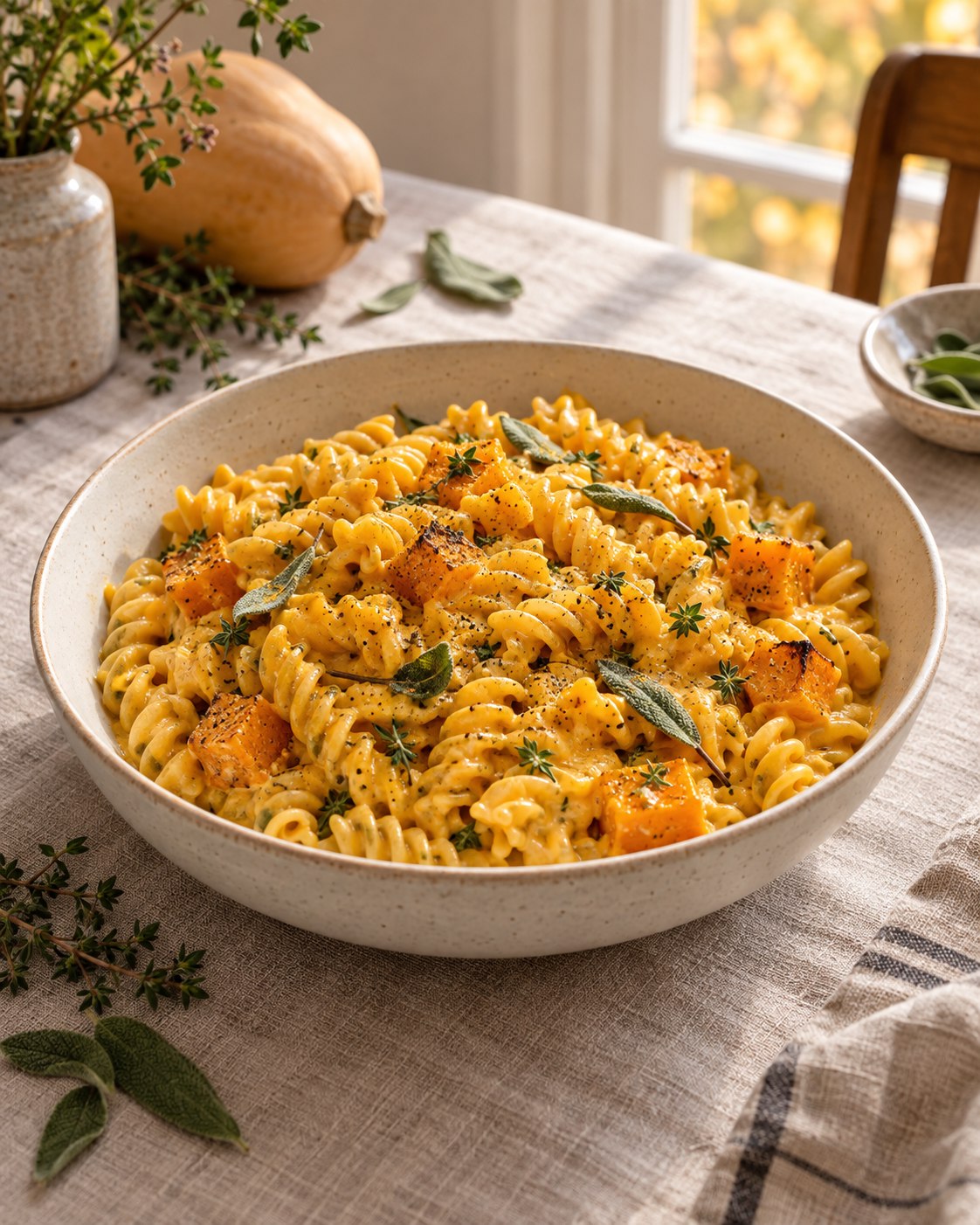
Creamy Butternut Squash Pasta with Sage
Roasted squash, shallots and garlic blend with cashews into a creamy sauce for rotini. Keep a few roasted squash cubes to scatter over the pasta with fresh sage.

Dinner · Fall · Sheet pan · Dairy-free
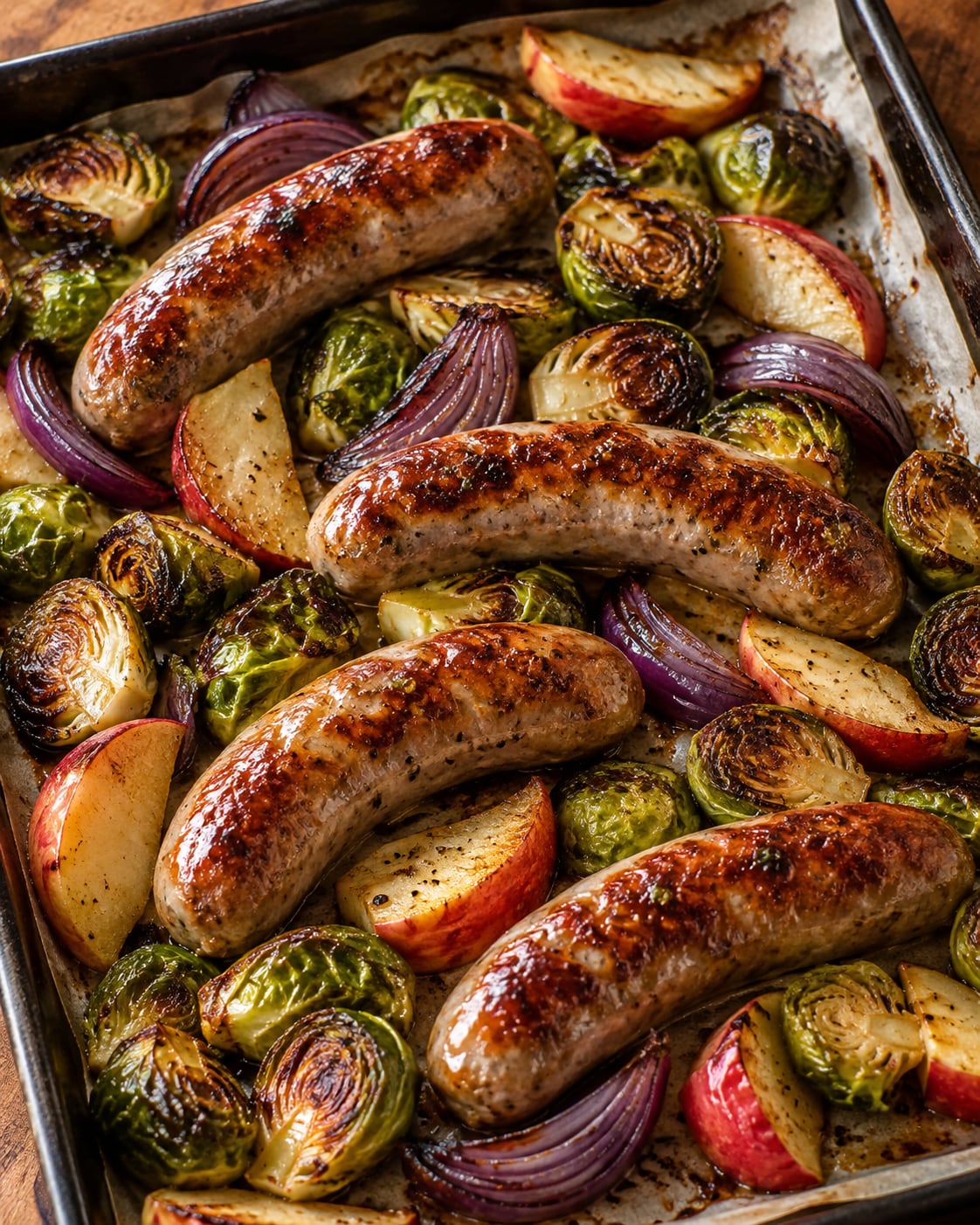
Fresh pork sausages roast with Brussels sprouts and red onion, then firm apple wedges join the pan for a maple-Dijon finish.
Cook without an account. Sign in only to save recipes to your kitchen.
Set your food preferences to see ingredient flags for this recipe.
YOUR NEEDS COME FIRST
Cooking with an intolerance? Choose ingredients to avoid before you explore.
Allow about 15 minutes to trim and cut produce, 30 to 35 minutes roasting and 5 minutes to rest. Sausage thickness and oven performance vary; finish by thermometer rather than time alone.
Durations are taken from the method and may overlap. Some preparation steps are not timed. Optional stages are separate from the main meal.
Heat the oven to 220°C (425°F). Line a large rimmed baking sheet with parchment rated for that temperature. Trim and halve the Brussels sprouts, cut the onion into thick wedges, and wash the apples. Keep the raw sausages and their juices away from the cut produce until everything is arranged for roasting.
Toss the Brussels sprouts and onion with 1 tablespoon olive oil, salt and pepper. Spread them across the sheet pan with the sprouts cut-side down. Nestle the whole sausages between them, leaving space for hot air to circulate. Use two pans if the food would otherwise be crowded.
Roast for 15 minutes. Meanwhile, core the apples and cut into thick wedges. Whisk the Dijon mustard, maple syrup, vinegar and remaining tablespoon olive oil in a small bowl.
Carefully remove the pan. Turn the sausages with tongs, add the apple wedges, and drizzle the maple-Dijon mixture over the apples and vegetables. Toss the produce lightly on the pan and return it to the oven. Wash any tongs or utensils that touched the raw sausages before using them to serve.
Roast for another 15 to 20 minutes, until the sprouts have browned edges and the apples are tender but hold their shape. Check each sausage in its thickest part with a clean digital thermometer; fresh pork sausage must reach 71°C (160°F). If needed, remove tender produce to a clean platter and continue cooking the sausages until they reach that temperature.
Rest the sausages for 5 minutes, then divide the sausages, apples and vegetables among four plates. Refrigerate leftovers in shallow covered containers within 2 hours; use within 3 to 4 days and reheat until steaming hot.
Yes, but check the package and cook raw poultry sausage to 74°C (165°F) with a digital thermometer. Timing may differ from pork sausage.
Adding thick wedges after the first roast helps them keep their shape while the sprouts brown. Firm apples such as Honeycrisp or Cortland are useful here.
Do not judge by browning alone. Insert a clean digital thermometer into the thickest part of each pork sausage and confirm at least 71°C (160°F).
Use a large rimmed pan and leave gaps between the food. If the pan is crowded, divide the mixture between two pans so the sprouts roast instead of steaming.
Refrigerate in shallow covered containers within 2 hours. Use within 3 to 4 days and reheat until steaming hot.
Use the recipe’s specific storage directions when provided. Read the food storage guide for chilling and reheating food, and the measures guide before changing portions or ingredients.
No public reviews yet. Cooked this recipe? Share how it went.
YOUR KITCHEN JOURNAL
Notes and cooking history sync with your household.
These are household reports and estimates, not verified public reviews or current store prices.
Adapted from Liz Barbour at The Creative Feast, whose sheet-pan method pairs fresh sausage, Brussels sprouts, apple and mustard. This version adds red onion, uses a maple-Dijon glaze, and adds the apples later.
Adapted from Liz Barbour at The Creative Feast.Additional guidance: Foodland Ontario: seasonal availability guide · Public Health Agency of Canada: cooking temperatures and leftover handling
Roasted squash, shallots and garlic blend with cashews into a creamy sauce for rotini. Keep a few roasted squash cubes to scatter over the pasta with fresh sage.
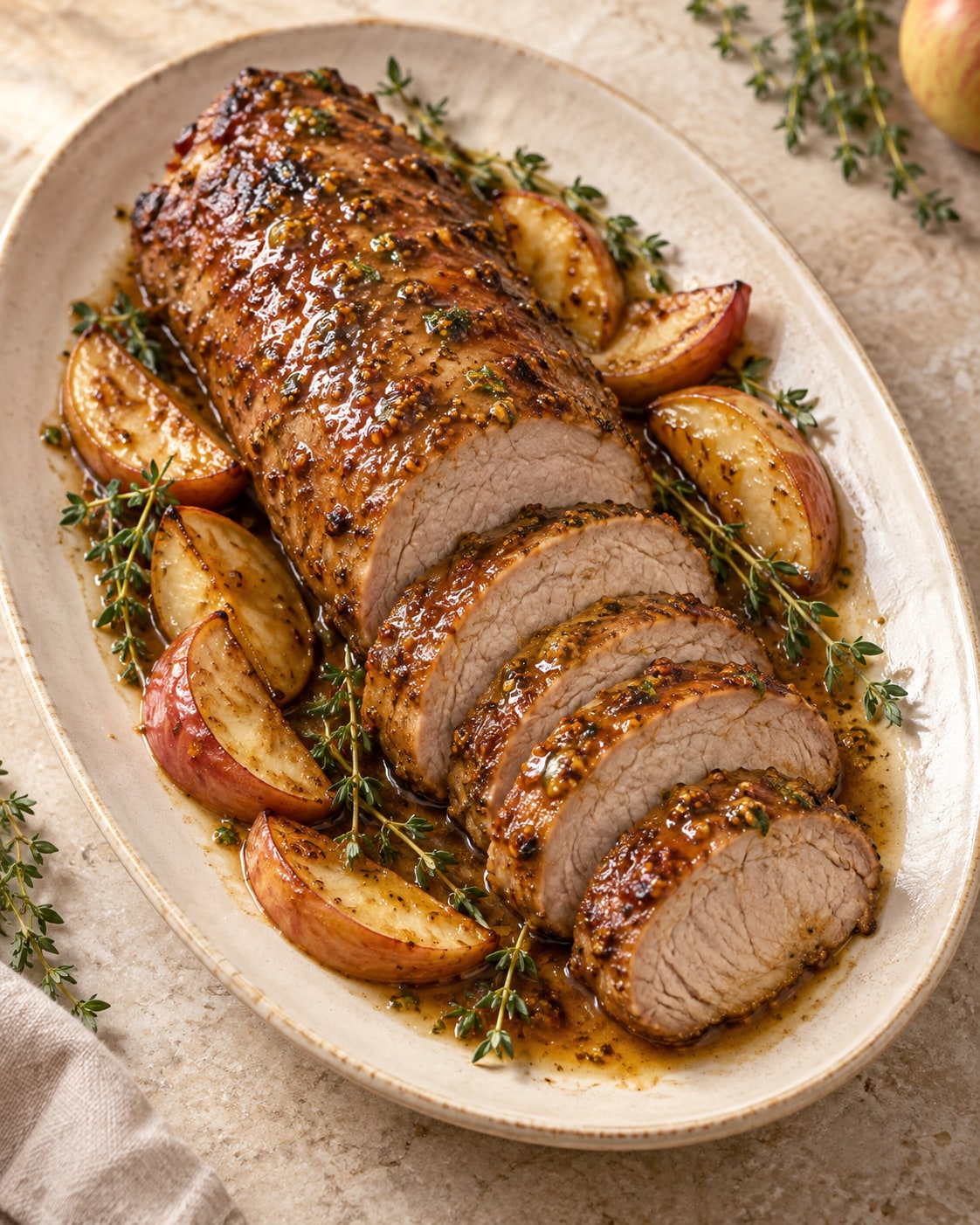
Pork tenderloin roasts with apple wedges, shallot and thyme, then rests while the maple-Dijon pan sauce reduces. Slice it for four autumn dinner portions.
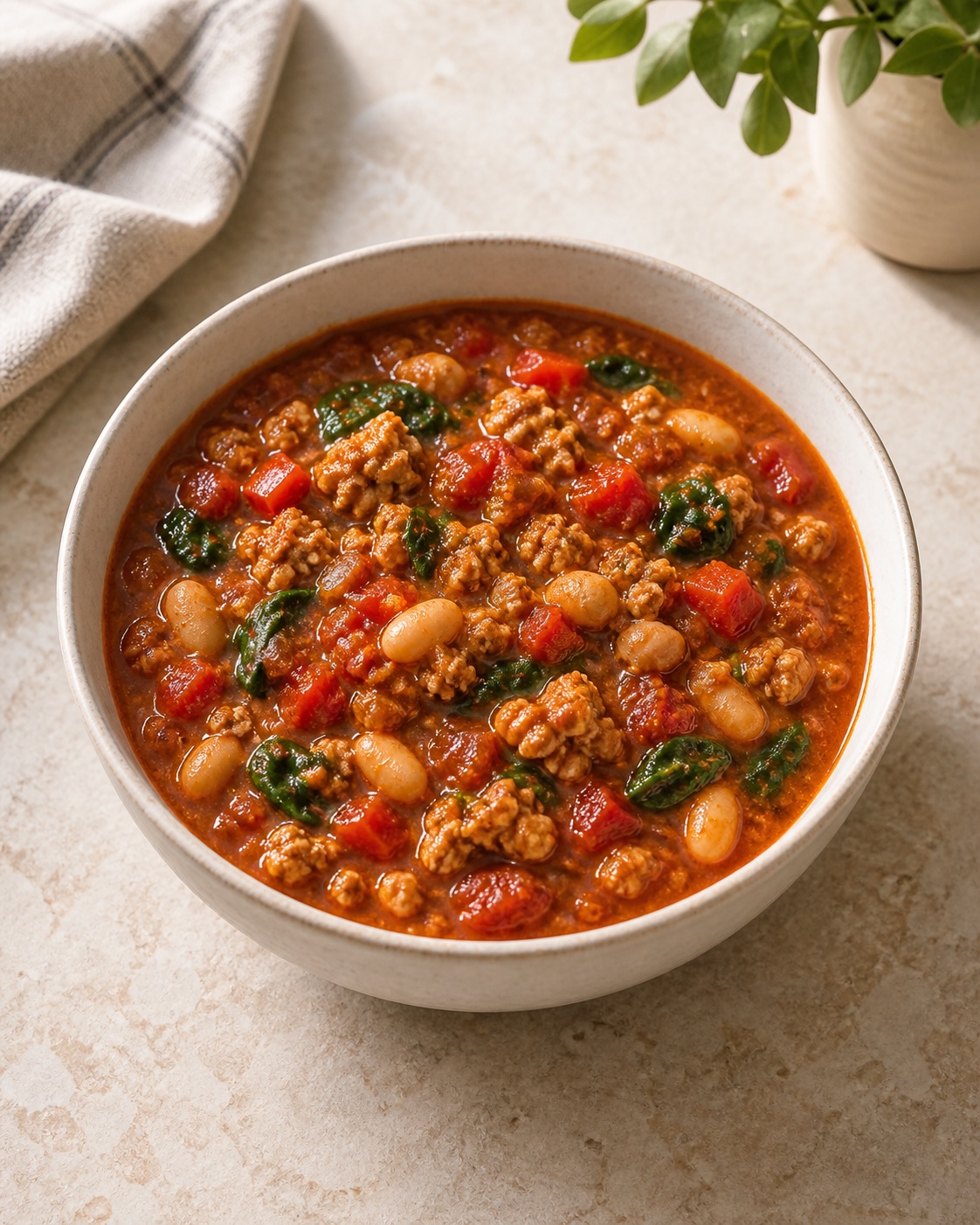
Pumpkin purée thickens a savoury pot of ground turkey, white beans and tomatoes. Spinach goes in at the end, with cocoa and warm spices in the sauce.
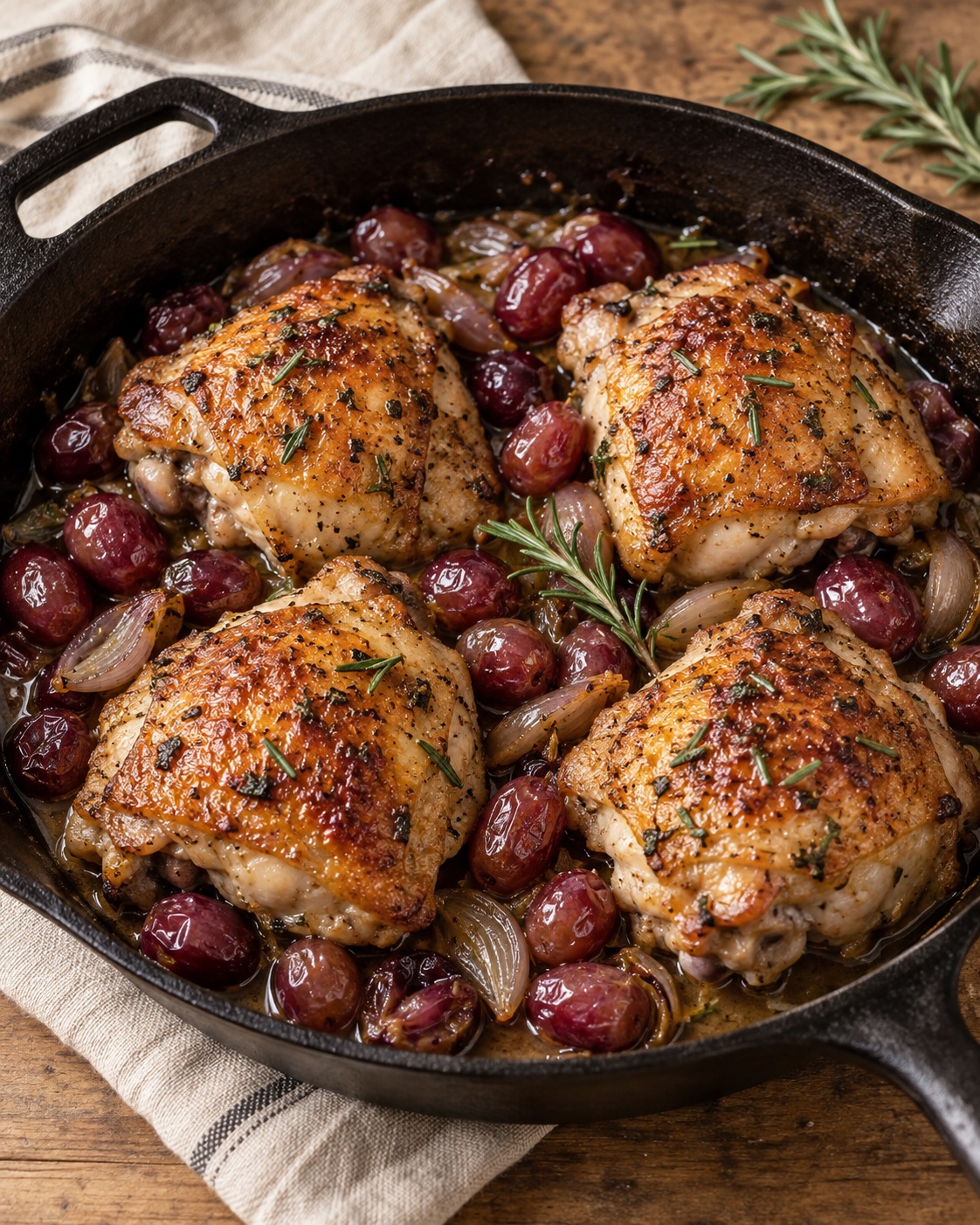
Browned chicken thighs roast with red grapes, shallots and rosemary, then meet a simple pan sauce. A savoury autumn dinner with little bursts of fruit.